
Last updated November 25, 2026
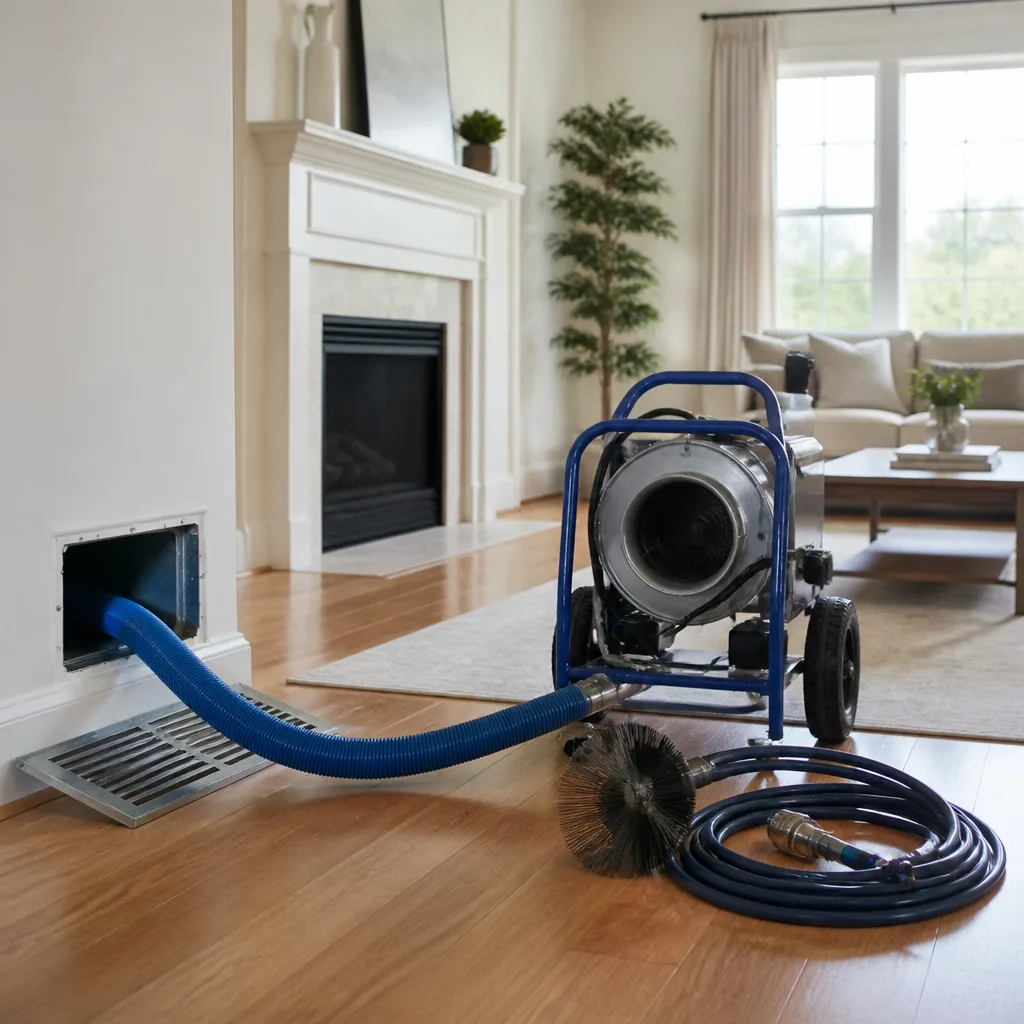 Whole-home duct cleaning
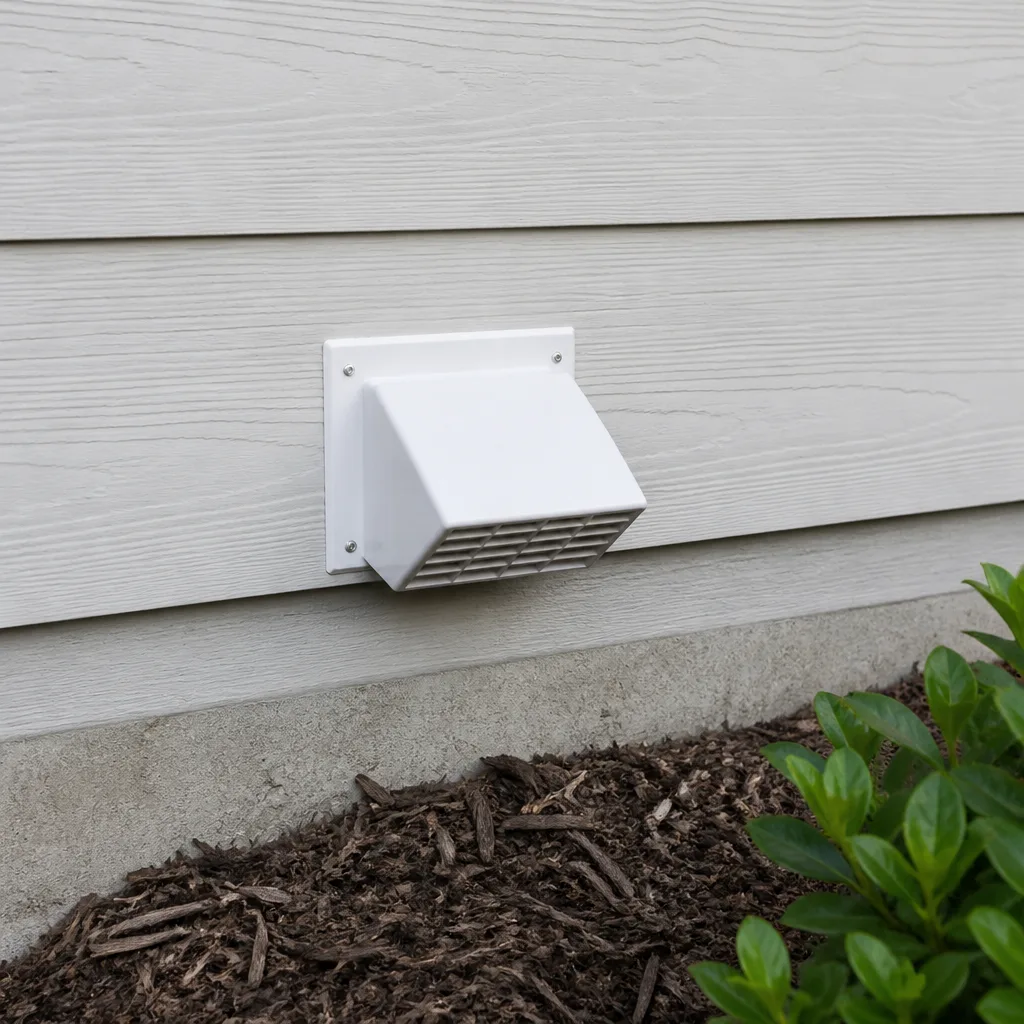 Dryer vent cleaning
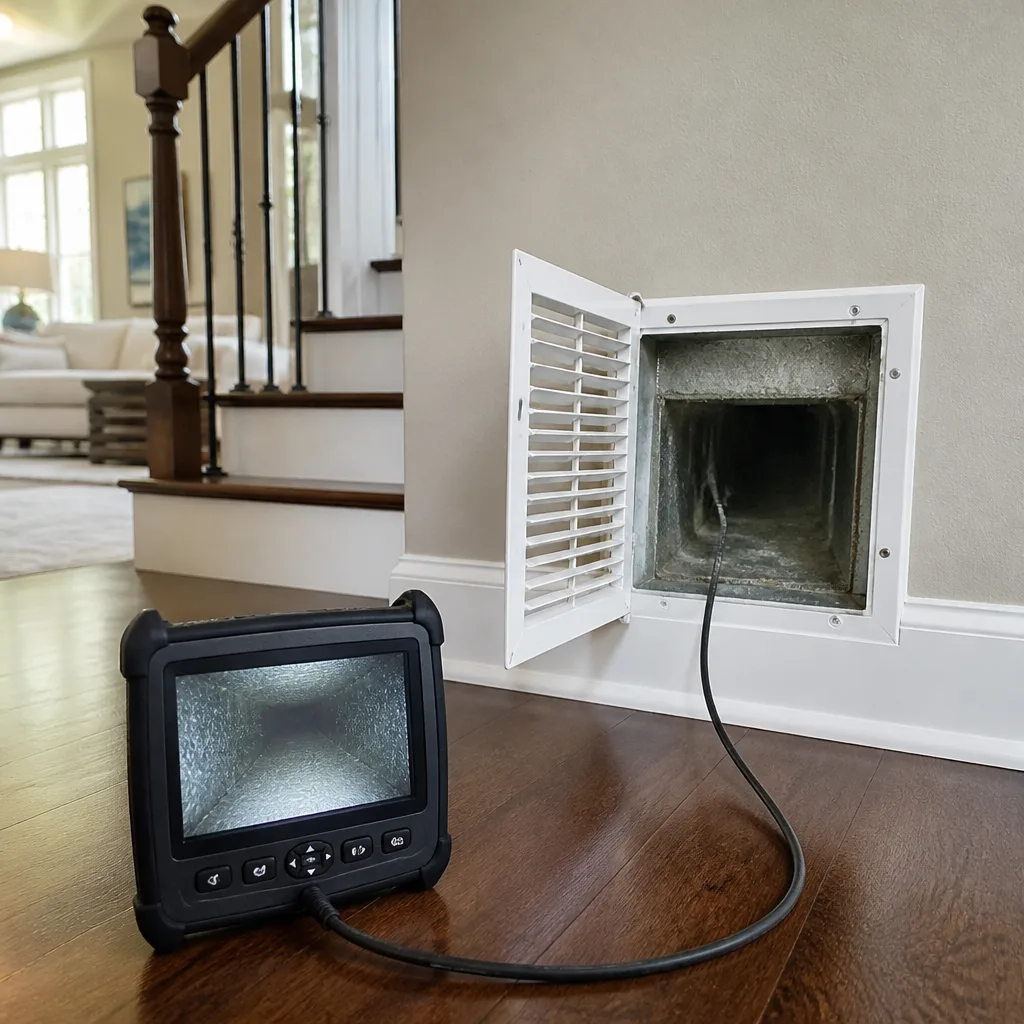 Camera inspection
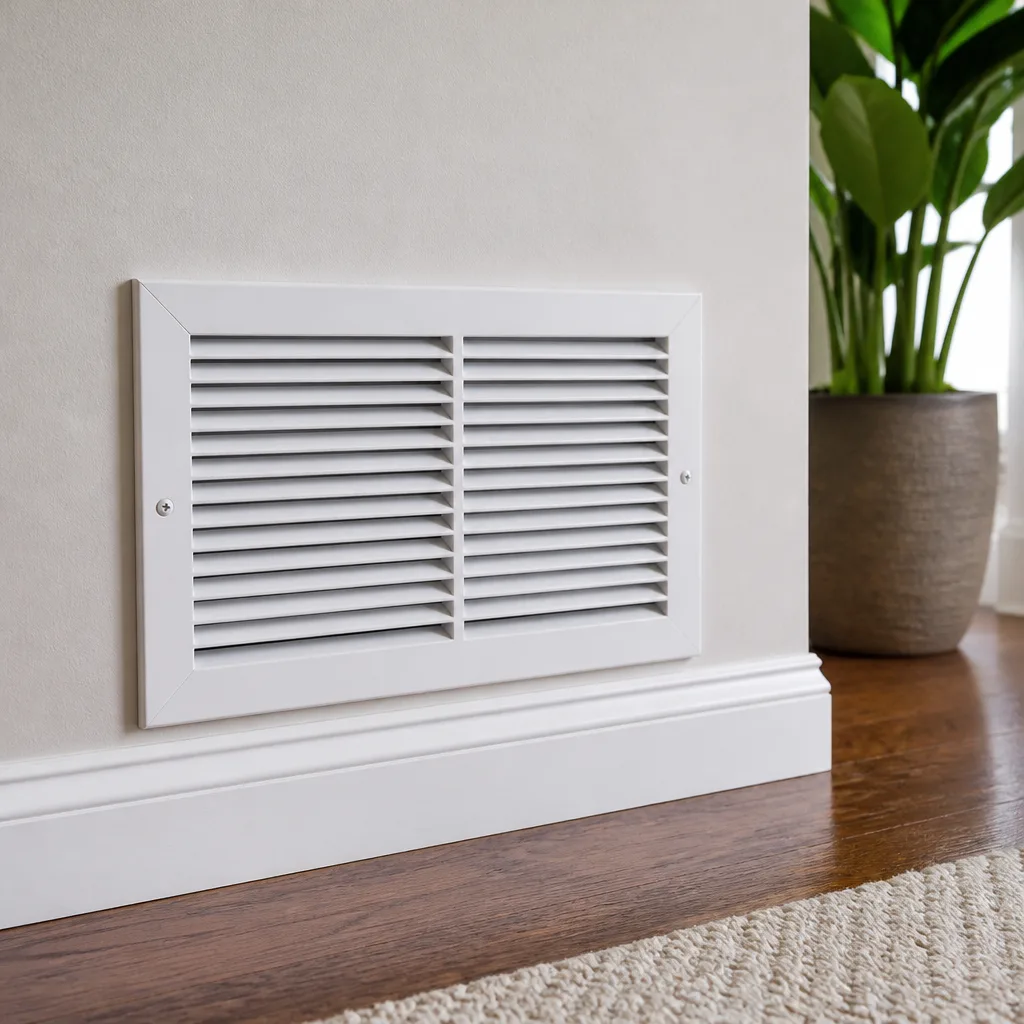 Sanitizing & deodorizing
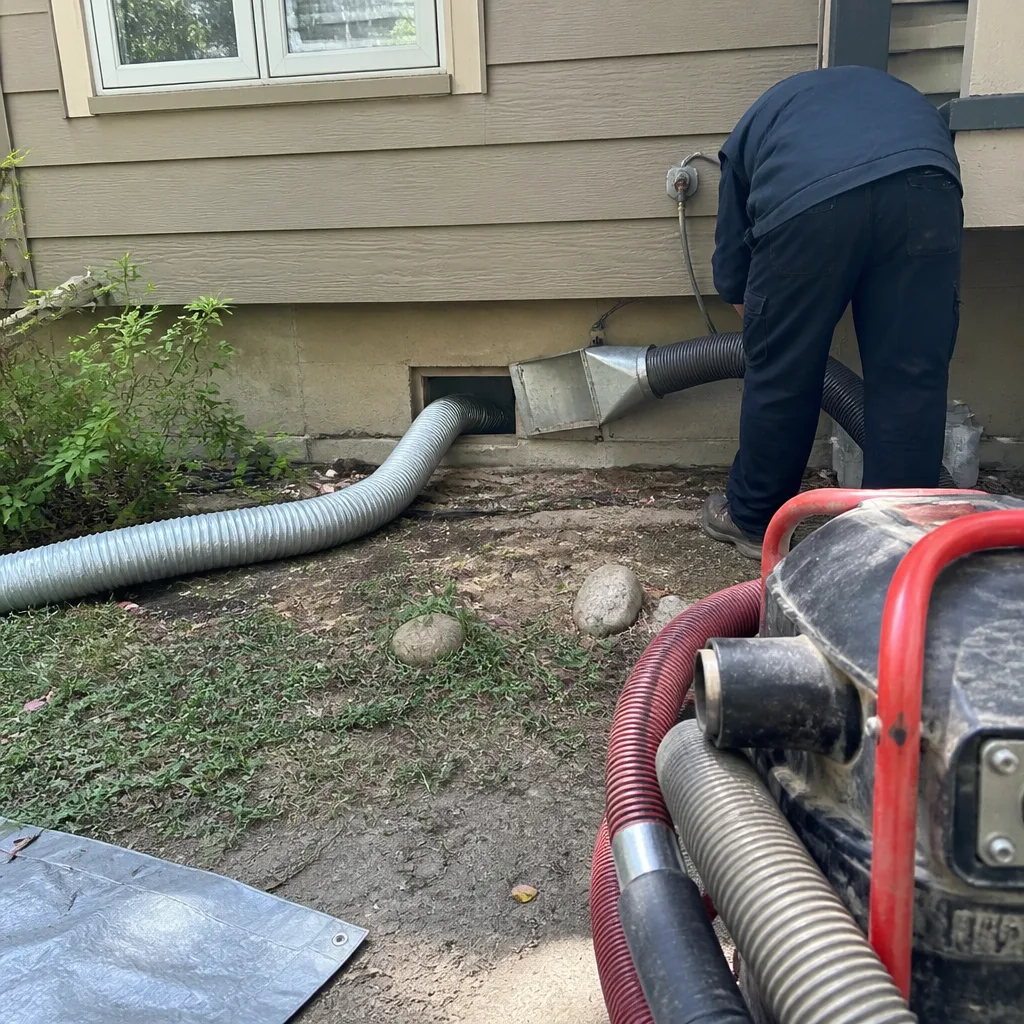
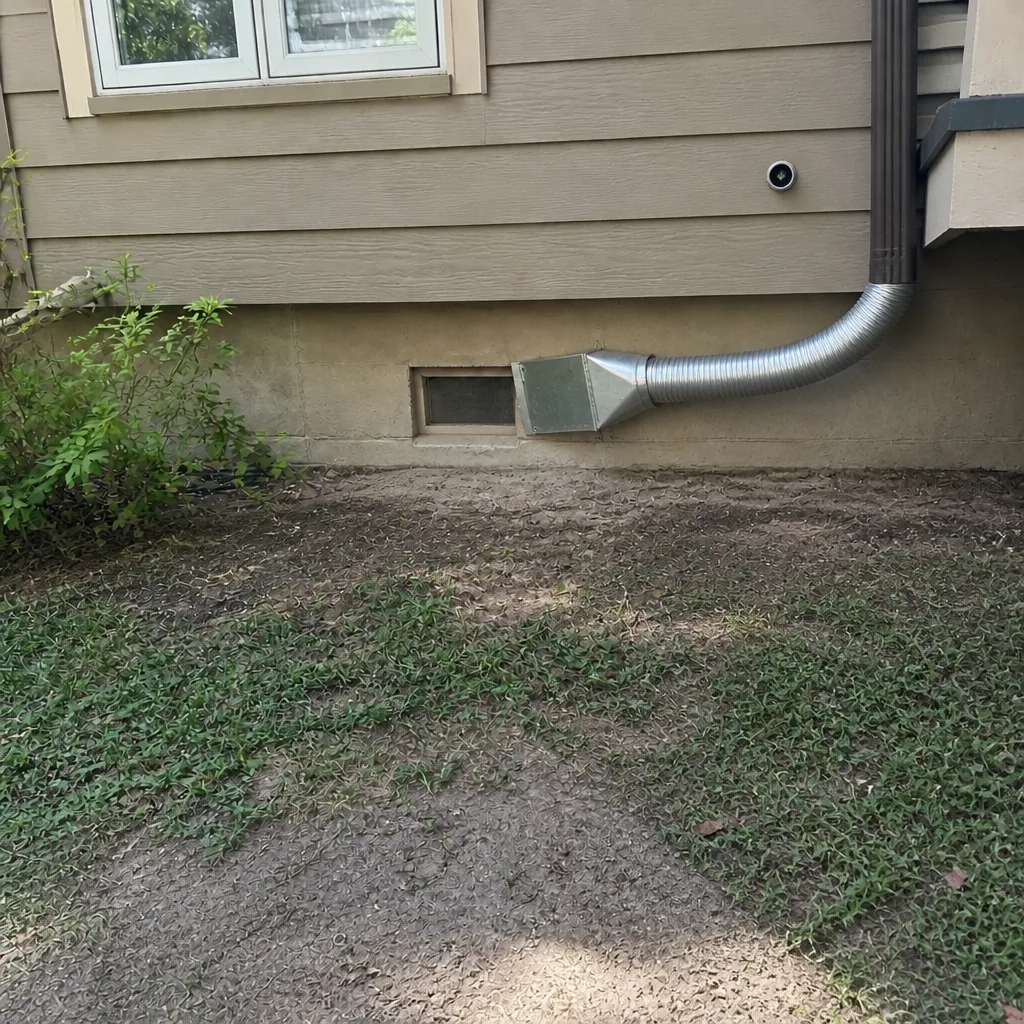
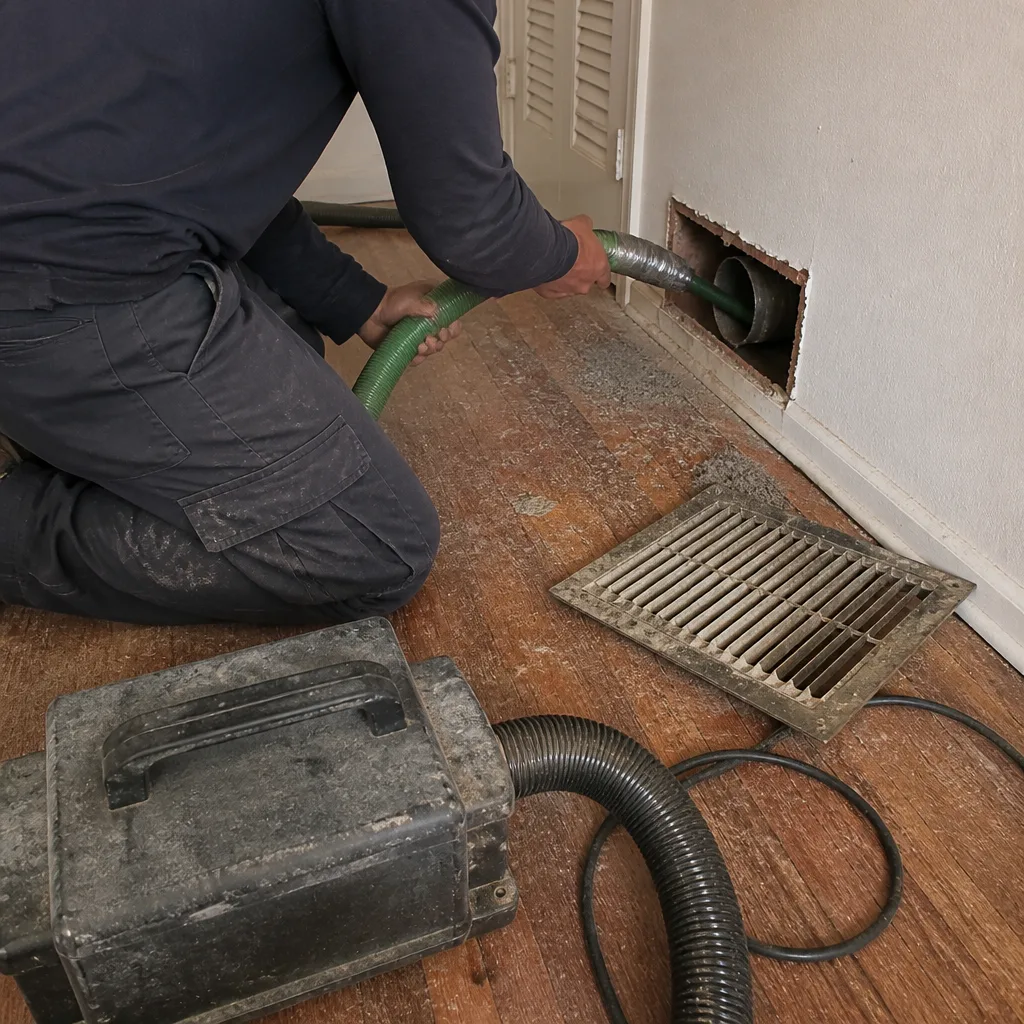
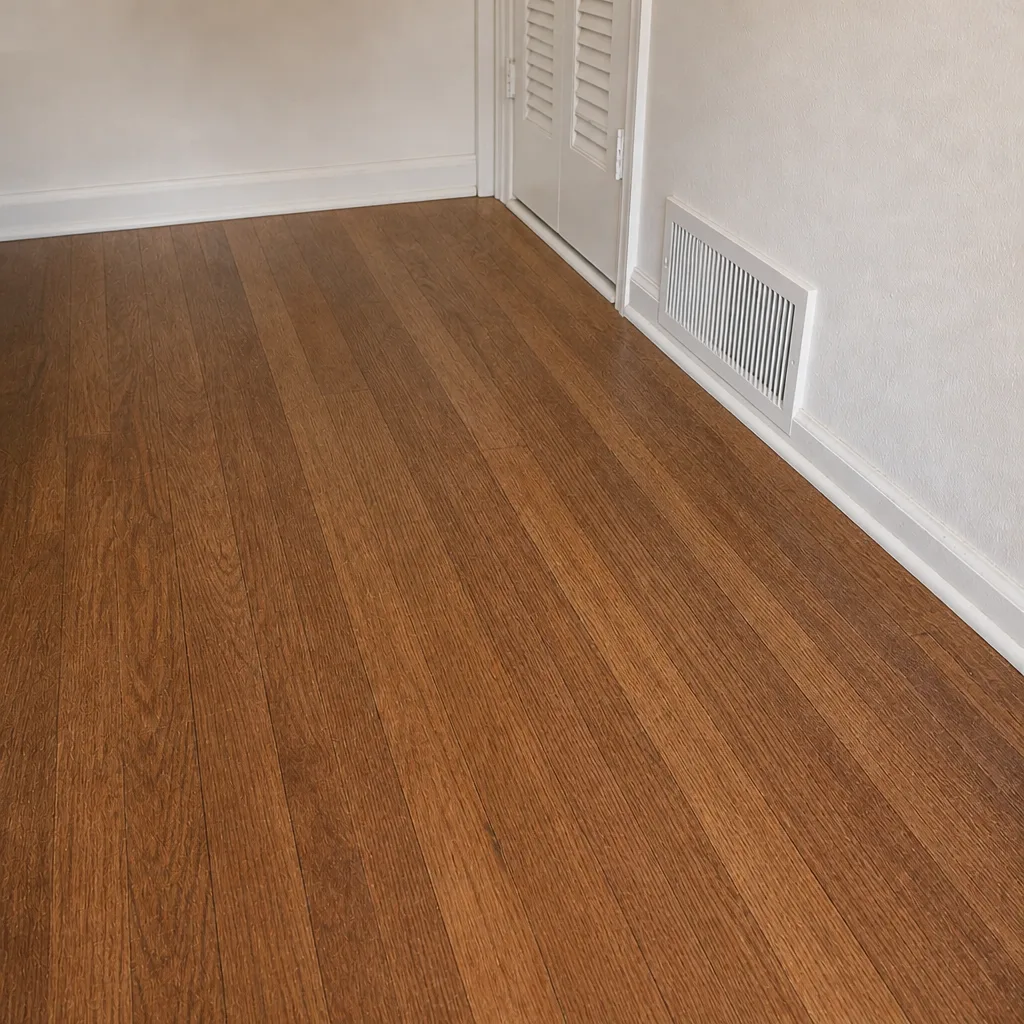
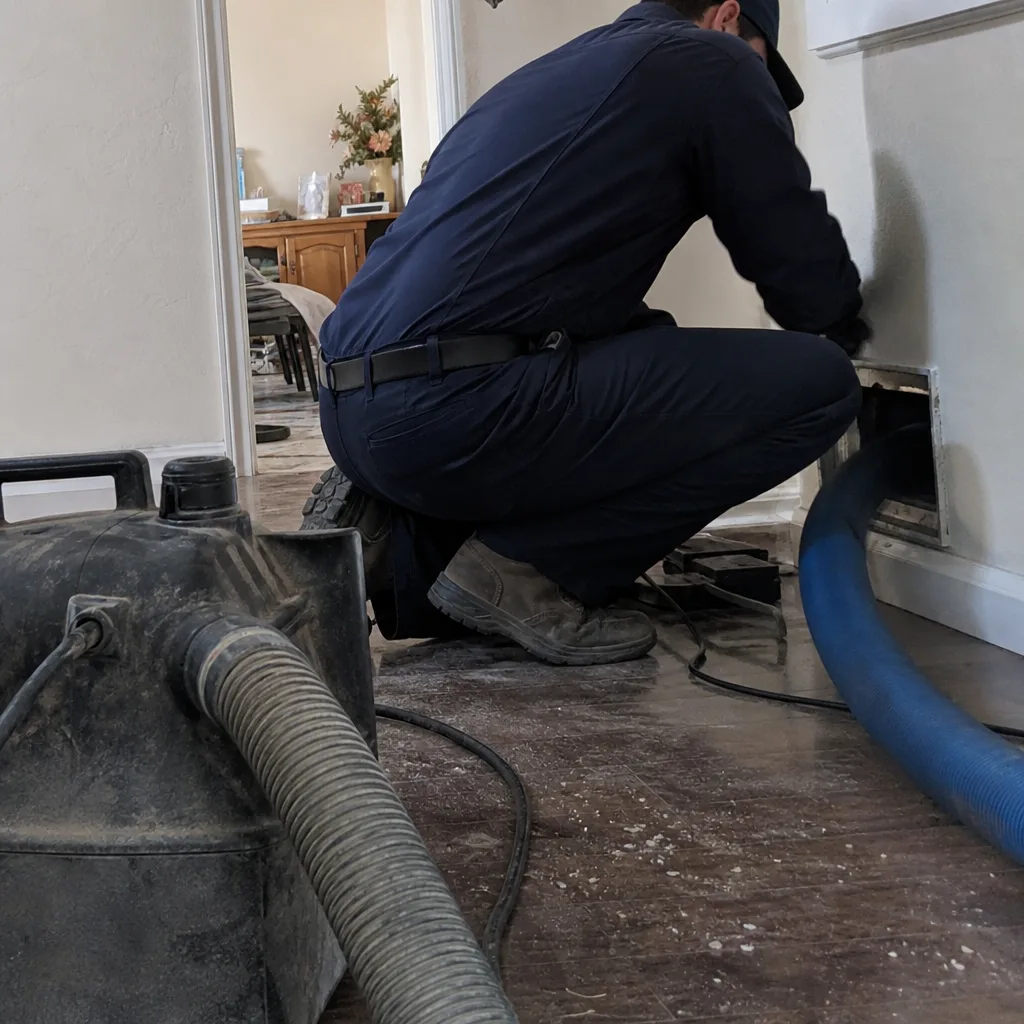
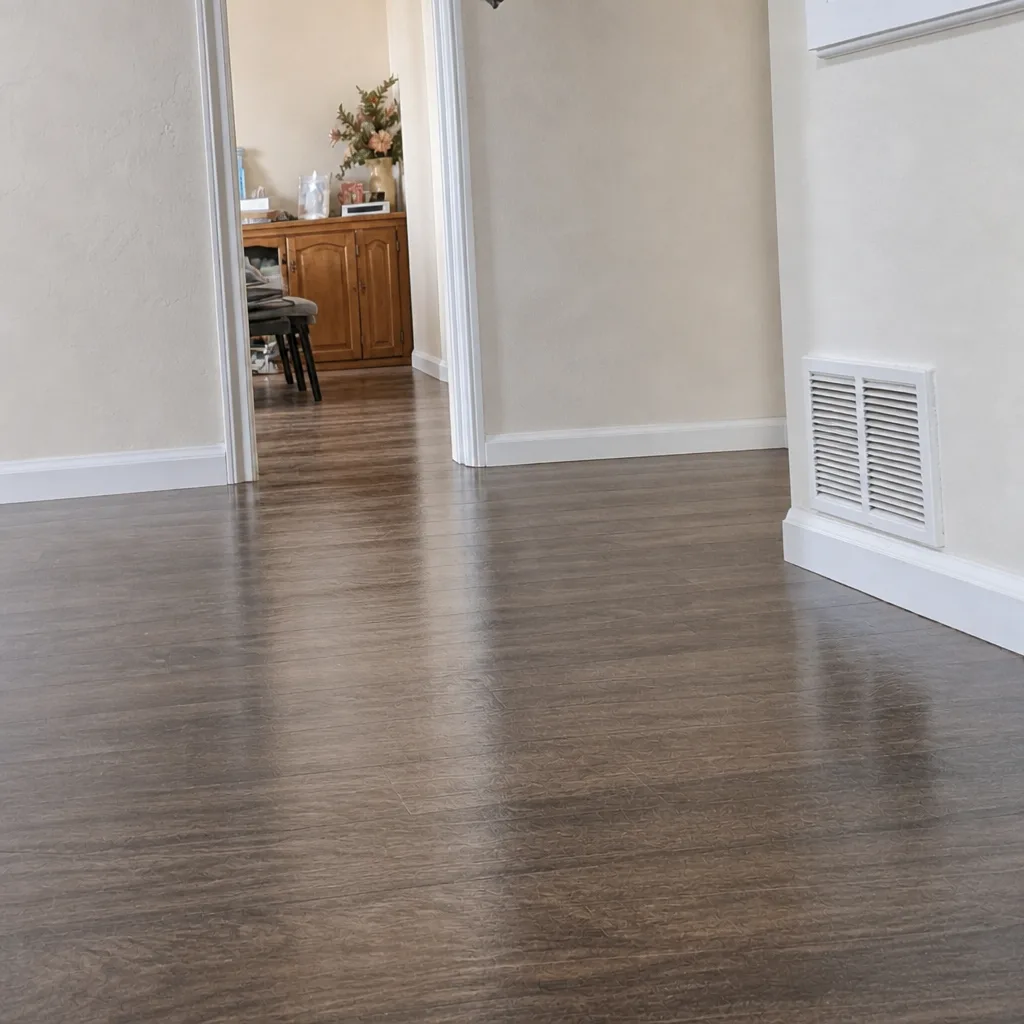
Whole-system duct and dryer vent check with before-and-after photos - you see exactly what came out of your vents
That "$99 whole-house special" is a bait ad - the real number appears once they are in your hallway, or the "clean" is a shop-vac at the register. We photograph the inside of your ducts before and after instead.
DIY vs Professional Air Duct Cleaning: The Westminster Homeowner’s Decision Guide
Most homeowners who ask about DIY duct cleaning are picturing the wrong machine. They picture a shop vac with a long hose, a brush kit from the hardware store, and an afternoon of work that saves a few hundred dollars. The honest answer is that willingness was never the bottleneck. The bottleneck is physics. A shop vac pulls a small fraction of the negative pressure that a professional truck-mounted or portable HEPA system generates, and that gap is the entire reason professional cleaning removes debris at the source instead of just stirring it loose. This guide is written from Westminster, where dry air, long heating seasons, and a housing stock full of older flex duct and remodeled basements make the difference even sharper. By the end you’ll know exactly what DIY can handle, what it can’t, and how to decide for your own home.
Styles & brands we work with
- Whole-home duct cleaning
- Dryer vent cleaning
- Camera inspection
- Sanitizing & deodorizing
Quick Answer
DIY air duct cleaning can handle surface work: register covers, return grilles, filter swaps, and clearing lint from an accessible dryer vent run. It cannot achieve source removal inside the duct system, because consumer vacuums don’t generate enough negative static pressure to pull embedded debris from duct walls and corners. For a Westminster home with visible dust issues, recent renovation, pets, allergies, or a duct system that hasn’t been cleaned in years, professional cleaning with commercial-grade equipment is the only method that actually completes the job.
Table of Contents
- What Negative Static Pressure Actually Does
- The DIY Tasks That Genuinely Work
- Where the DIY Ceiling Is
- When DIY Makes Professional Cleaning Harder
- Mold and Biological Contamination: Not a DIY Scenario
- The Honest Cost-Benefit Framework
- Westminster-Specific Factors
- A Step-by-Step Decision Checklist
- Common Mistakes to Avoid
- When to Call a Professional
- Frequently Asked Questions
- The Bottom Line
What Negative Static Pressure Actually Does
A shop vac generates roughly 1 to 2 inches of water column in negative pressure. A professional duct cleaning system operates in a range closer to 8 to 12 inches. That pressure differential is the reason contact cleaning works. Negative static pressure is the suction force a machine applies to the inside of a duct, measured as vacuum against the duct wall. At low pressure, dust lifts off the metal and then settles back down a few feet away when the machine shuts off. At high pressure, dust lifts, travels, and gets captured at the source by a HEPA filtration unit and a contained airflow setup.
This is why professional systems use two pieces of equipment working together. An agitation tool – a rotating brush or air whip on a flexible drive – knocks debris off the duct wall, and a high-pressure vacuum pulls it into a HEPA capture unit at the same time. Neither piece does the job alone. A brush without real suction just redistributes dust. A vacuum without agitation can’t loosen the adhered layer. Our own setup pairs Rotobrush agitation systems with Nikro HEPA vacuum units because that combination is what makes contact cleaning actually remove material rather than move it around.
Containment is the second half of the equation. When you break loose years of dust inside a closed system, that material has to go somewhere. Abatement Technologies negative-air and filtration equipment creates a contained pressure envelope around the work area so the debris ends up in a filter, not in your living room.
- Consumer vacuum: low negative pressure, no containment, no HEPA capture at the source.
- Push broom or shop brush: loosens surface dust without removing it from the system.
- Professional system: high negative pressure plus agitation plus HEPA capture plus negative-air containment.
None of this is a knock on your shop vac. It’s a good machine for what it was built for. Duct cleaning just isn’t what it was built for.
The DIY Tasks That Genuinely Work
There’s real work a homeowner can do – efficiently, safely, and with no equipment ceiling. These tasks matter, and doing them consistently cuts down on how often the deeper work is needed.
- Clean register covers and return grilles. Pop them off, wash them in the sink or hose them off outside, and dry them fully before reinstalling. Dust on the cover is the most visible layer of the problem and the easiest to fix.
- Replace filters on schedule. Follow the filter manufacturer’s interval and check it more often during heating season or after a renovation. A clogged filter chokes airflow and puts strain on the blower, which is a much more expensive problem than dirty registers.
- Vacuum around the registers and return. The carpet and baseboards right at the grille collect dust that gets pulled back into the return. A quick pass with a household vacuum keeps that loop from feeding itself.
- Clear an accessible dryer vent run. If your dryer vent is short, straight, and reachable, you can pull lint from the duct with a vent brush and vacuum the transition area behind the dryer. Do it regularly – a clogged dryer vent is a fire risk waiting to be cleared.
- Keep the return path open. Furniture, rugs, and storage pushed against return grilles reduce airflow. A few inches of clearance is a free fix with measurable effect on how the system runs.
None of these require anything more exotic than a vacuum and a screwdriver. Together they’re a legitimate maintenance routine. What they are not is duct cleaning in the sense that matters for indoor air quality, and it helps to be clear-eyed about where that line sits.
Where the DIY Ceiling Is
The ceiling shows up the moment you’re dealing with the interior surface of the duct system rather than the exterior. Consumer equipment can’t reach into a 6-inch branch run, apply enough negative pressure to lift adhered dust, and capture it in a contained way. It also can’t inspect what’s inside – which is arguably just as important.
Here’s what sits above the DIY line:
- Dust adhered to the interior walls of trunk lines and branch runs.
- Debris in flexible duct that’s settled at low points or pooled near transitions.
- Contamination inside the air handler cabinet and the coil area.
- Biological growth – more on that in a moment.
- Anything inside the return trunk that runs through a wall cavity.
- Cleaning on the supply side of the system, where most of the delivered air passes.
The ceiling is not about how hard you’re willing to work. It’s about whether you’re applying the right pressure and containment at the right point in the system. That’s an equipment question, and it’s the reason we build every job around the tools rather than the other way around. When a Westminster homeowner calls us to look at a system they’ve already tried to clean themselves, the first step is often assessing what’s still sitting inside the runs after the DIY pass.
When DIY Makes Professional Cleaning Harder
This is the part of the DIY conversation most guides skip. Sometimes the attempt itself creates new problems.
The first is dislodged debris. When a consumer vacuum loosens dust but doesn’t capture it, some of that material travels further into the system and settles in an area that’s harder to reach. A professional cleaning can still handle it, but the job is now more involved because the debris has been spread rather than removed. In our experience, a home that’s been “cleaned” with a shop vac often takes longer to bring back to baseline than one that was left alone.
The second is damaged flex duct. Flexible duct is built around a wire helix with a thin inner liner. Push a stiff brush through it wrong and the liner tears or the helix kinks. A kinked section restricts airflow permanently, and a torn liner becomes a place where debris and moisture collect – so you’ve turned a cleaning job into a Westminster Air Duct Cleaning Pros repair call. Flex duct can be cleaned safely, but it has to be handled with the right tool at the right speed, and that’s not something a homeowner should be experimenting with inside a wall cavity.
The third is moisture. If you introduce water or a wet cleaning method without proper drying and negative-air control, you can create the exact conditions that promote biological growth. We seal and dry systems deliberately for that reason, and it’s why we treat duct repair and sealing as part of the same conversation as cleaning – the system needs to stay intact and dry after the work, not just look clean on the day.
If you’ve already tried a DIY pass and something feels off – airflow is weaker, you’re hearing a rattle, or dust at the registers hasn’t improved – it’s worth having the system checked before running another round.
Mold and Biological Contamination: Not a DIY Scenario
If you suspect mold or biological growth anywhere in the system, stop. This is the one scenario where DIY is a health liability, not a cost savings.
Mold in ductwork is a containment problem before it’s a cleaning problem. Disturbing growth without negative-air containment spreads spores through the house, and that can make allergy and respiratory symptoms worse rather than better. Proper remediation involves sealing the work area, running HEPA filtration and negative air, physically removing the affected material where possible, and then treating surfaces with products designed for that purpose. It’s also a diagnostic exercise – you need to understand why the growth took hold. A leak, an oversized or undersized system, a wet evaporator coil, or a duct that’s pulling in humid air from a crawlspace are all common causes, and cleaning without addressing the cause just resets the clock.
This is where sanitizing tools matter beyond surface cleaning. Our air quality treatments use Aprilaire and Honeywell-grade products designed for HVAC environments, and we pair them with the same containment setup used on the cleaning itself. The goal is a system that’s clean, dry, and controlled – not one that’s been fogged and left to whatever airflow does next.
If you’re sensitive to dust or mold, or you have young children or a household member with respiratory concerns, treat any sign of biological growth in the ducts as a professional call. That’s the honest answer, and it’s the one worth hearing early.
The Honest Cost-Benefit Framework
Duct cleaning isn’t a mandatory service on a fixed schedule. When it pays back depends on what condition the system is in and what’s happening in the home. Here’s how we’d frame the decision.
When professional cleaning usually pays back
- Recent renovation. Drywall dust, sawdust, and construction debris get pulled into returns and settle in the system. Cleaning after the work is finished gets you back to a clean baseline.
- Moving into a new home. You don’t know what the previous owner’s maintenance looked like. Cleaning before you settle in is cheaper than cleaning after the first allergy season.
- Persistent dust or visible buildup at registers. If you’re dusting more than you used to, or the registers look dirty a week after cleaning, the source is often in the system, not the room.
- Pets in the home. Pet dander and hair accumulate in the return-side ductwork and keep getting reintroduced to the air you circulate.
- Allergy symptoms that improve away from home. This is a signal worth taking seriously and worth pairing with a professional inspection.
- System airflow problems where the ducts are the suspected cause. A sealed, clean system moves air the way it was designed to. Cleaning plus duct repair and sealing addresses the root cause, not just the symptom.
When cleaning is optional
If you’ve inherited a well-maintained home, changed filters consistently, have no pets or recent renovation, and aren’t noticing dust or airflow issues, cleaning on a strict schedule isn’t necessary. Keep up the DIY routine, keep the filters current, and have the system looked at if something changes. We’d rather tell you it’s not needed yet than sell a job that doesn’t serve you.
If you’re weighing the cost of a cleaning against other HVAC work, the context matters. A cleaning plus sealing project has a different value than a cleaning alone if your ducts are leaky. That’s why we look at the whole system – cleaning, HVAC cleaning, integrity, and air quality – rather than quoting one piece in isolation.
Westminster-Specific Factors
A few local conditions tilt the DIY-versus-professional question in Westminster more than a generic guide would suggest.
The first is dry air and long heating seasons. Westminster sits at elevation along the Front Range, where dry conditions and cold winters mean the furnace runs heavily for a large part of the year. More runtime means more air cycles through the ducts, which means more dust loading over time. Homes here reach a “cleaning needed” point faster than homes in milder climates, all else equal.
The second is housing stock. Westminster has a mix of older ranch-style homes, mid-century builds with retrofitted systems, and newer construction, and each presents its own duct layout. Older homes often have flex duct that’s been added or rerouted, and that duct is more vulnerable to damage during an aggressive DIY attempt. Newer builds sometimes have longer trunk runs where settled debris is harder to reach without real suction.
The third is renovation activity. Basement finishes, kitchen remodels, and additions are common in Westminster, and each one pulls construction dust into the HVAC system. A cleaning after a renovation is one of the most clearly justified professional calls you can make.
The fourth is seasonal cycles. Spring dust storms and pollen followed by closed-window heating season mean debris that accumulates outdoors can end up inside the system. A cleaning in the fall, before the heat comes on, is a reasonable anchor point for many households.
A Step-by-Step Decision Checklist
Use this to sort your own situation into the right column.
- Check your registers. Are the covers visibly dusty, and does dust return within a week of cleaning? If yes, the source is likely inside the system.
- Note recent events. Renovation, move-in, new pets, or water intrusion in the last year are all reasons to consider professional cleaning.
- Track symptoms and dust. More dusting, worsening allergy symptoms indoors, or musty odors when the system runs are signals worth acting on.
- Note airflow. Weak airflow at some registers but not others can indicate debris, a damper issue, or a duct problem – all reasons to have the system looked at.
- Rule out DIY damage. If a previous DIY attempt left airflow weaker or introduced a rattle, have the system inspected before doing anything else.
- Check the dryer vent separately. A long or inaccessible dryer vent run should be on your professional calendar even if the main ducts are fine.
- Schedule a consultation. A professional on site can tell you what’s in the system, what condition the ducts are in, and what’s actually needed. Call (833) 736-5689 for a free estimate.
If steps one through four come up clean and you haven’t had a renovation or move-in, you’re likely fine with the DIY routine. If any of them flag, the professional call is the more economical path.
Common Mistakes to Avoid
- Using a shop vac as if it were a duct cleaning system. It will pull some surface dust, but it won’t reach into branch runs or capture what it loosens. In Westminster’s dry climate, that dust has to go somewhere – usually back into the air.
- Pushing a stiff brush into flex duct. Flex duct has a thin liner that’s easy to tear. A damaged liner becomes a collection point for debris and a future repair.
- Cleaning registers without touching the source. Wiping the grille makes the room look better, but the dust returns from the system within days.
- Ignoring the dryer vent because the main ducts are “fine.” A clogged dryer vent is a separate safety issue, and it doesn’t get resolved by anything you do to the main HVAC ducts.
- Fogging or spraying an unknown product into the ductwork. DIY sanitizing products without proper containment can leave residue and moisture behind. Biological concerns need professional treatment.
- Assuming cheaper is safer. Low-price duct cleaning offers are often low for a reason – no containment, no real agitation, and no documentation. The equipment question is the value question.
- Skipping the post-cleaning check. A proper cleaning ends with a look at what was removed. If a service can’t show you before-and-after evidence of your own ducts, ask why.
When to Call a Professional
Call a professional if you see visible dust blowing from registers, notice persistent musty odors when the system runs, have household members with worsening allergy or respiratory symptoms, finished a renovation, moved into a home with unknown maintenance history, or have pets in the house. Call if your dryer vent run is long, hidden, or hasn’t been cleared. Call if a previous DIY attempt left airflow weaker or the system noisy. And call if you suspect mold, moisture, or biological growth anywhere in the ductwork – that’s not a job to sort out with consumer tools. Westminster Air Duct Cleaning Pros offers free estimates in Westminster – call (833) 736-5689.
Frequently Asked Questions
No. A shop vac can clean register covers, grilles, and accessible surfaces, but it cannot generate the negative static pressure needed to pull adhered debris from inside duct runs or capture it with HEPA containment. It can even redistribute dust deeper into the system if used aggressively.
The price is set per job by a written estimate after the system has been looked at, because the work depends on the home’s duct layout, the number of runs, and the condition of the system. We give one flat price per system agreed before work starts, with no per-vent pricing. Call (833) 736-5689 – estimates are free.
Cheap quotes usually mean cheaper equipment: no HEPA capture, no negative-air containment, and no real agitation. That combination stirs dust rather than removing it. A duct cleaning is a whole-system job, and the equipment in the van is the biggest indicator of what you’re actually getting. Call (833) 736-5689 and we’ll explain what a proper cleaning involves before you commit.
Ask for before-and-after photos of your own ductwork, and expect the technician to walk you through what was found and removed. A legitimate service will also explain the condition of the system afterward – not just hand you a receipt. Call (833) 736-5689 to schedule an estimate.
The dry air and long heating season here mean the furnace runs heavily and more air cycles through the ducts each year, so systems in Westminster often reach a “needs cleaning” point faster than in milder climates. Renovation activity and spring dust add to it. That doesn’t mean every home needs a yearly cleaning, but it does mean the DIY routine matters more, not less.
It often does, particularly when the ducts are the actual source of the dust and debris you’re seeing. We don’t promise health outcomes, but eliminating the source of recirculated dust and pairing it with proper filtration is a reasonable step when the DIY routine hasn’t moved the needle. We can walk you through what’s realistic for your system when you call.
Yes, especially if the run is long, runs through a wall or roof, or hasn’t been cleared in years. We treat dryer vent cleaning as a core service because a clogged vent is a fire risk, and the accessible DIY pass doesn’t reach the parts of the run that matter most.
We offer both. air duct cleaning handles the duct system, and HVAC cleaning addresses the air handler and coil area where debris also accumulates. Doing both together gives you a cleaner baseline for the whole system. Call (833) 736-5689 for a free estimate.
The Bottom Line
DIY air duct cleaning is a real thing for the parts of the system you can reach – registers, grilles, filters, and an accessible dryer vent. It is not a substitute for professional cleaning, because consumer vacuums don’t generate the negative pressure needed for source removal, and without HEPA containment, a DIY attempt can spread dust further than it started. The decision in a Westminster home comes down to what you’re seeing: dust, symptoms, renovation debris, pets, or a system you’ve just inherited all point toward a professional call. Keep up the DIY routine between visits, be honest about what you can reach, and bring in professional equipment when the system needs it. If you’re unsure which side of the line your home is on, call (833) 736-5689. We answer 24/7. Fast dispatch from 7am to 7pm, Sunday through Friday. Estimates are free, and we’ll tell you honestly whether a cleaning is warranted yet.
Written by the team at Westminster Air Duct Cleaning Pros.
See the difference
 Before
 After
 Before
 After
 Before
 After