
Last updated November 25, 2026
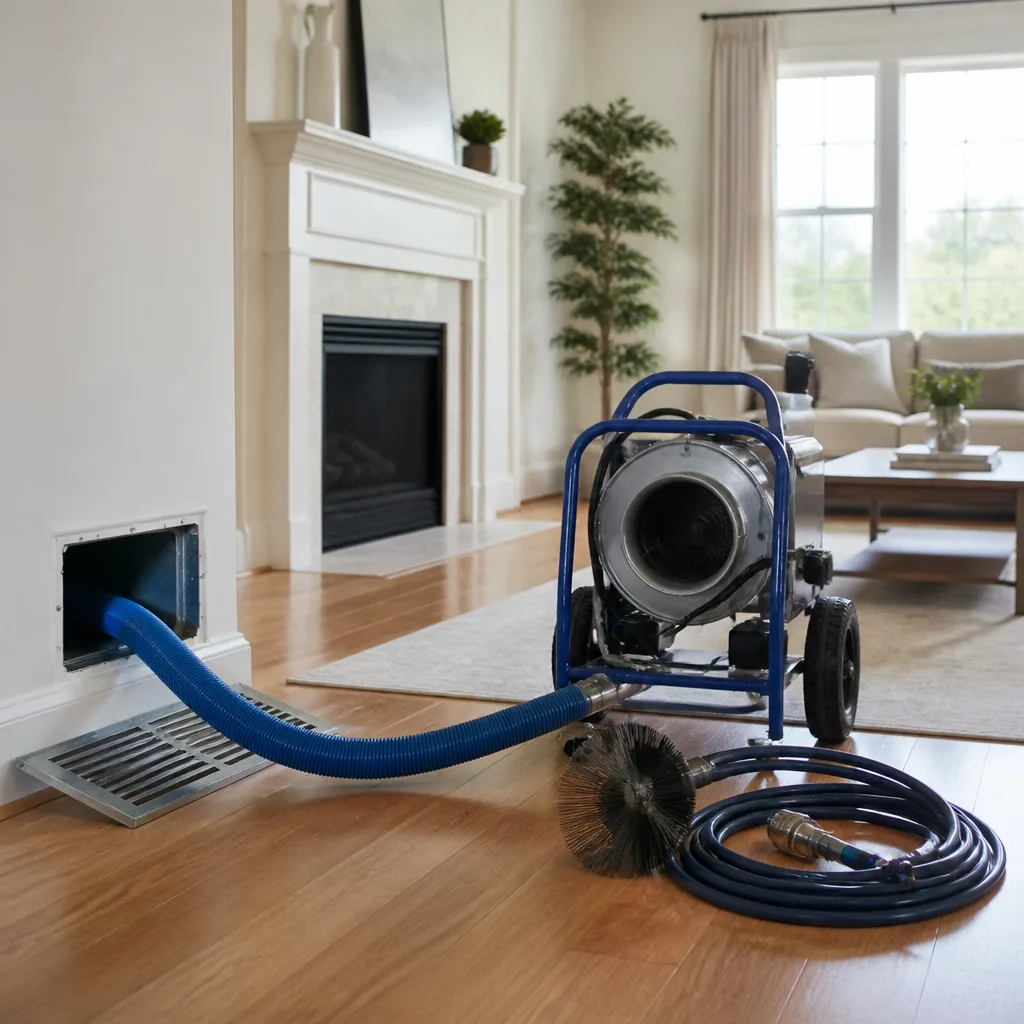 Whole-home duct cleaning
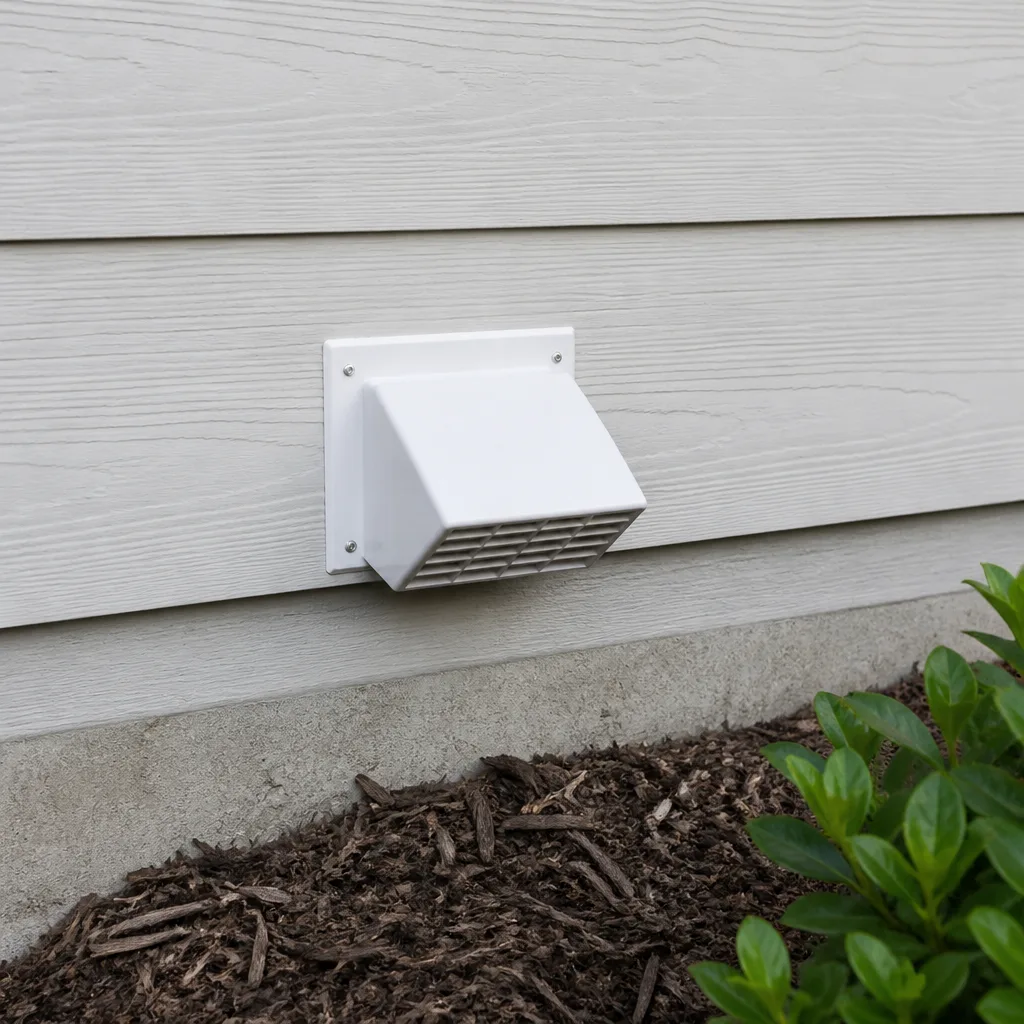 Dryer vent cleaning
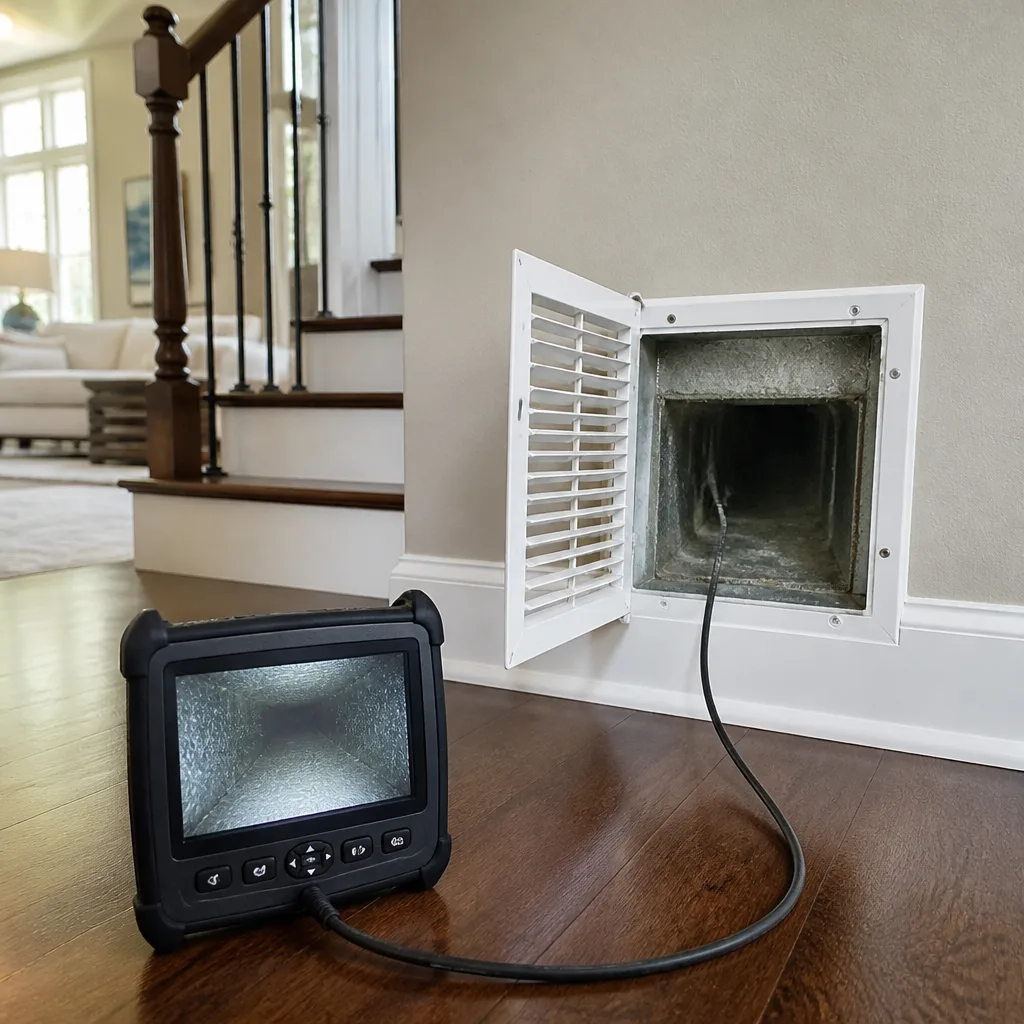 Camera inspection
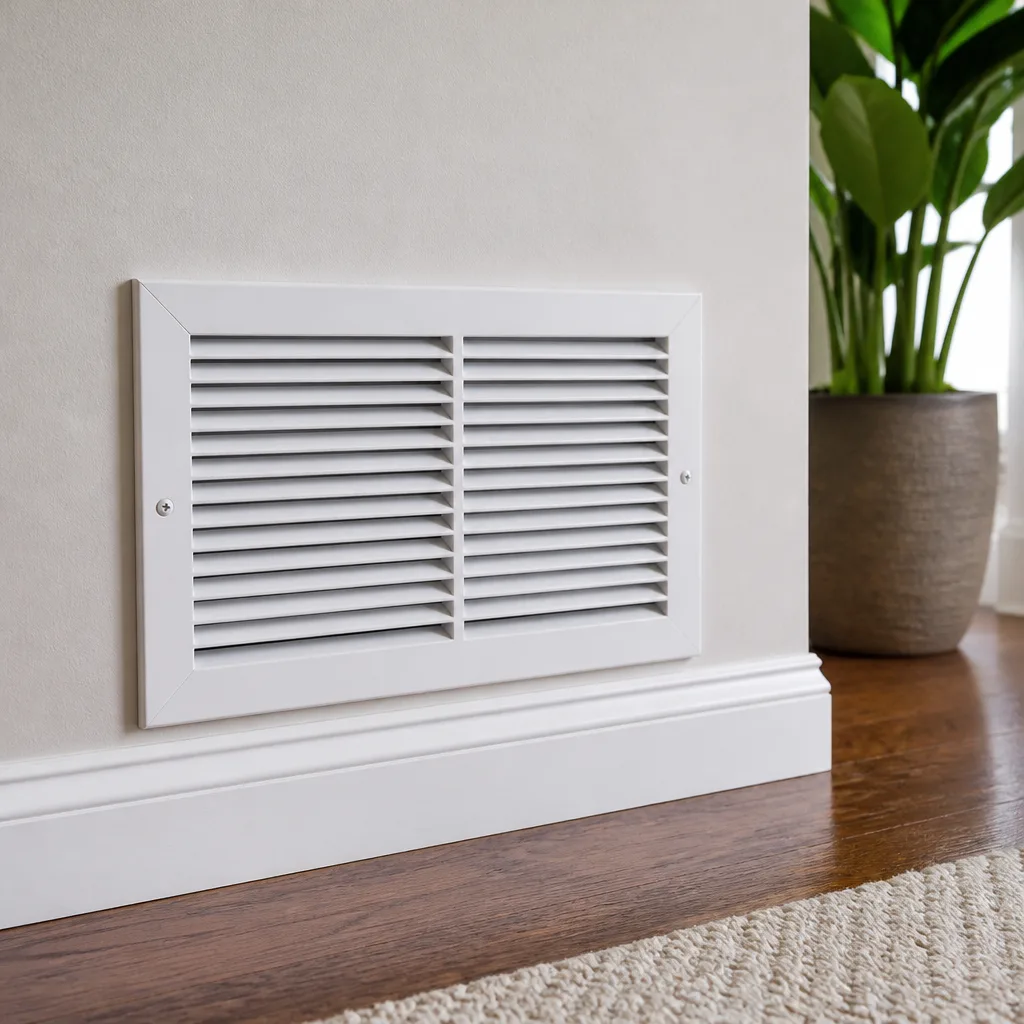 Sanitizing & deodorizing
Whole-system duct and dryer vent check with before-and-after photos - you see exactly what came out of your vents
That "$99 whole-house special" is a bait ad - the real number appears once they are in your hallway, or the "clean" is a shop-vac at the register. We photograph the inside of your ducts before and after instead.
Air Duct Cleaning Warning Signs: A Westminster Homeowner’s Reference Guide
Uneven room temperatures are more often a duct problem than an equipment problem. That’s the part most homeowners never hear, because the first diagnostic step in a lot of HVAC service calls is the furnace or the thermostat, not the duct system carrying the air. When the real cause is a crushed flex run or a separated joint inside a wall cavity, the equipment gets blamed, adjusted, or replaced, and the actual restriction keeps costing you comfort for years. This guide walks through the signals that show up before visible dust does, and it’s written from what we see in Westminster homes every week. You’ll learn to tell contamination signs from restriction signs, read your filter and blower wheel, and know when to call.
Quick Answer
Air duct problems show up in two families of warning signs: contamination signs (odors, visible debris at registers, allergy spikes, musty smells after a renovation) and restriction signs (hot and cold rooms, weak airflow at far registers, a furnace that runs long, filters that load up fast). In Westminster’s dry Front Range climate and tight modern construction, restriction is the sign most often missed because it never produces visible dust. Any of these signals combined with a home you’ve just moved into, a recent renovation, or ducts you’ve never had inspected is a reason to get a professional assessment.
Styles & brands we work with
- Whole-home duct cleaning
- Dryer vent cleaning
- Camera inspection
- Sanitizing & deodorizing
Table of Contents
- The Two Families of Duct Warning Signs
- Restriction Signs: When Airflow Is the Problem
- Contamination Signs: When the Ducts Themselves Are Dirty
- Post-Renovation Debris vs. Biological Growth
- Warning Signs in Older Flex Duct Runs
- What Fast Filter Loading Tells You
- The Furnace Cabinet and Blower Wheel as Early Indicators
- Your Dryer Vent Deserves Its Own Check
The Two Families of Duct Warning Signs
Most warning-sign lists online treat every duct problem as a dirt problem. In our experience, that misses half the picture. Duct issues split into two categories, and they behave completely differently. Contamination is about what’s in the airstream. Restriction is about whether the air can move through the system at all. A home can have a perfectly clean duct system with a crushed run that starves three bedrooms of heat, or spotless airflow through ducts caked in debris that’s feeding odors into every room.
Getting the category right matters because the fix is different. Contamination calls for cleaning, and often sanitizing. Restriction calls for inspection, repair, and sealing. A company that only cleans will clean a restricted system and hand you back the same hot-and-cold rooms. A company that only repairs won’t address the debris that’s been sitting in those runs for years. That’s why we treat the duct system as a whole: cleaning, integrity, and air quality together.
Here’s how to sort what you’re noticing:
- Contamination signs: musty or stale odors when the system runs, visible dust streaks at supply registers, dark staining around return grilles, allergy or asthma symptoms that get worse indoors, a smell that appeared after a renovation or a move-in.
- Restriction signs: rooms that never reach the thermostat setting, weak airflow at registers far from the furnace, a system that runs much longer than it used to, whistling at some registers and silence at others, filters that clog in weeks instead of months.
- Both at once: a persistent smell plus uneven temperatures usually means debris in the ducts and a leak or separation letting air escape before it reaches the room.
In Westminster, both families are common for reasons that are partly geographic. Front Range air carries fine dust and pollen through much of the year, and homes here run heating and cooling across a wide temperature swing. Tight newer construction holds that dust in the system instead of letting the house breathe. When that trapped dust meets restriction, you get a home that never quite feels right and a utility bill that never quite makes sense.
Restriction Signs: When Airflow Is the Problem
Restriction is the diagnostic step that gets skipped. If you take one thing from this guide, take this: a room that won’t heat or cool is a duct question before it’s an equipment question. The furnace or air handler can be running perfectly and still fail to condition a bedroom if the branch run feeding that room is crushed, kinked, disconnected, or blocked by a closed damper nobody remembers closing.
Walk your home and check these signs:
- Compare airflow at the registers. Hold a piece of tissue or your hand at each supply register while the system runs. A strong, steady push at some registers and a thin trickle at others is a classic sign of a restriction on the weak runs.
- Note which rooms are always off. If the same two rooms are too hot in summer and too cold in winter, the pattern points to the branch runs serving those rooms, not to the thermostat.
- Listen at the grilles. Whistling means the opening is undersized or a damper is partially shut. Silence where you expected airflow often means a separated joint upstream.
- Time the furnace. A system that runs noticeably longer than it used to, and still doesn’t satisfy the thermostat, is working against a restriction.
- Check the return side. A single undersized return can starve the whole system. Look for return grilles that pull hard at the edges or feel weak when you put your hand near them.
Diagnosing which of these is happening means looking inside the ductwork, which is where professional assessment enters. When we inspect a Westminster home, we’re checking for crushed or disconnected flex runs, gaps at the plenum and trunk joints, and duct runs that leave the conditioned space and lose their heat or cooling to an unconditioned attic. If the system is restricted, the fix is duct repair and sealing, not another cleaning. You can read more about the full-service side of that work on our HVAC cleaning page, since the air handler and the duct system share the same air and the same problems.
One more restriction sign worth naming: pressure. If a door slams itself or pulls hard against the latch when the system is running, or you feel air pushing past a closed door, the house has a pressure imbalance. That usually means the return path is too small or the supply side is leaking into walls. A pressure imbalance is one of the mechanical signals that rarely shows up as dust, but it always shows up as comfort.
Contamination Signs: When the Ducts Themselves Are Dirty
Contamination is what most people picture when they hear “dirty ducts,” and the visible signs are the ones everyone knows. But the signs that matter most appear before visible dust reaches your registers. In our line of work, a homeowner is usually motivated to call by one of these four things:
- Odors when the system starts. A musty, stale, or vaguely sour smell in the first minutes after the furnace or AC kicks on is the strongest single sign your ducts are holding debris or microbial growth. If the smell is worse in one part of the house, that’s the run to inspect first.
- Visible debris at supply registers. Streaks of dark dust around the grilles, or dust puffs that appear when the system starts, means the airstream is carrying material that was never meant to reach your living room.
- Allergy and asthma patterns. Symptoms that worsen when you’re indoors and improve when you’re away from home for a day point to something in the indoor air. Duct debris and the pollen it collects are a common contributor in Westminster’s spring and summer.
- Recent move-in or renovation. A home you just bought, or a room you just gutted, is the most common trigger for contamination. Drywall dust, construction debris, and drywall scraps left inside a duct are a frequent surprise.
Dust at a register isn’t proof on its own. A small amount of dust accumulation is normal. The pattern that matters is onset and speed. Dust that builds up in weeks, in a home with a working filter, means something upstream is producing it. That’s when a professional inspection is worth the call, because the source needs to be found, contained, and removed with equipment that captures dislodged debris rather than blowing it back into the room.
Westminster’s climate adds a specific wrinkle. Dry air means a lot of fine, airborne dust, and it also means the spring pollen season can be intense. A duct system that’s never been cleaned collects both, year over year, and a filter change doesn’t reach it. If you’ve tried a new filter, a new vacuum, and an air purifier and the smell or the symptoms persist, the ducts are the part you haven’t tested.
Post-Renovation Debris vs. Biological Growth
Renovations create a duct problem most homeowners don’t anticipate: construction debris in the ductwork. When drywall is cut, sanded, or removed, and when duct runs are opened for new light fixtures, outlets, or returns, dust and debris find their way into the system. So does the occasional cut-off piece of framing or drywall. Distinguishing that from biological growth matters because the fixes are different, and the smell tells you which you have.
Construction debris smells like construction. It’s chalky, sharp, or dusty. Think of the smell of drywall dust in a room you just sanded. It’s strongest right after the work, it fades when the system is off, and it returns when the system runs because the dust is being stirred. The debris tends to show up in the rooms closest to where the work happened. You may also see fine white or gray dust at registers in the renovated area.
Biological growth smells musty or sour. It’s damp, earthy, or like a wet basement. It’s strongest in the first minutes of a heating cycle and tends to get worse over the season, not better. It’s often centered on the air handler or the run nearest it, since moisture tends to collect where the air is cool. Visual signs after an inspection: soft dark spots on duct interior insulation, staining on the blower wheel, or growth on the evaporator coil.
Why does this distinction matter? Because debris needs removal with agitation and containment, and biological growth needs the moisture source addressed plus sanitizing treatment. Blowing a shop vac through a duct system with fine drywall dust doesn’t remove it, it redistributes it, and a cleaning that doesn’t address the moisture source can leave the growth to return. That’s exactly why the professional side of this work uses Rotobrush agitation to dislodge debris and a Nikro HEPA vacuum to capture it, with Abatement Technologies negative-air equipment keeping the dislodged material contained during the job. You can read more about the cleaning side of this process on our air duct cleaning page.
One more renovation caveat specific to Westminster homes: many were built or had additions built with flex duct runs that route through the attic or knee walls. Renovations often disturb those runs without anyone realizing it. It’s worth a look after any job that opened walls or moved insulation.
Warning Signs in Older Flex Duct Runs
Flex duct is a great material when it’s installed right: it routes through tight spaces, it’s insulated, it moves air efficiently. But it’s also the part of a duct system most likely to fail silently. Older flex runs, especially those from previous decades or installed in a hurry during a renovation, fail in three ways: they collapse, they separate at the joints, or the inner liner tears. None of these produces visible dust in your living room.
What you notice instead:
- A run that used to work and doesn’t. A room that was uncomfortable only in extreme cold becomes uncomfortable all the time. That’s a collapse or a partial separation slowing flow.
- Airflow that changes with the season or the system. A run that works on cooling but not heating is often a flex duct with a kink that behaves differently as the duct heats and softens.
- Condensation or staining in the attic. If you go into the attic and see a flex run crushed flat under insulation, kinked around a pipe, or with a visible gap at the boot, it’s restricting airflow and losing energy at the same time.
- Air leaking into walls. A separated joint inside a wall cavity blows conditioned air into the wall instead of the room. That can show up as pressure at the door, weak airflow at the register, and in some cases moisture on the drywall.
- Whistling or rattling at startup. A torn inner liner flaps and makes noise. Persistent rattling at a register that’s new is a sign worth investigating.
Older flex runs are also where we most often find the “where did all my heat go” answer. A run that leaves the conditioned space, crosses an unconditioned attic in a Westminster winter, and has a crushed section loses much of its heat before it reaches the room, and the furnace runs longer to compensate. The homeowner pays twice: once for the heat, and once for the extra run time. Repairing and sealing that run addresses the root cause, which is the part surface cleaning never touches.
If you’re noticing these signals, the practical step is a duct inspection that includes the attic runs, not just the visible registers. The full range of duct services we cover, from cleaning to repair and sealing, is laid out on our main Westminster Air Duct Cleaning Pros page.
What Fast Filter Loading Tells You
Your filter is a diagnostic tool, and it’s free. Its job is to catch what the system dislodges, and how fast it loads tells you what’s happening upstream. Most homeowners change a filter on a calendar, not on appearance. Here’s the correction: how fast a filter loads is written by the condition of your ducts and returns.
A filter that loads in weeks instead of months is a sign of a dust problem upstream. The usual cause is fine debris in the return ducts or a return that’s pulling air from an area that isn’t sealed, like an attic or crawlspace. In Westminster, a filter that goes gray or tan fast is very often catching construction dust or Front Range grit that found its way into a return.
A filter that’s clean on the face and dark on the edges is a sign of a filter bypass. Air is getting around the filter instead of through it, which means debris is reaching the blower, the coil, and downstream. That’s a ductwork and filter-fit problem, not a filter-quality problem.
Two or three filters a season instead of one or two a year is a mild version of the same signal. It’s worth a look at the return system and at the air handler area.
One caution: a higher-MERV filter won’t fix a dust problem, and it isn’t always the right move. Increasing filtration on a restricted duct system increases resistance and can make the comfort problem worse. If a filter keeps loading fast, the answer is not a better filter, it’s a look at the system. A professional inspection, before the next filter change, is a cheaper step than replacing the filter every six weeks for another year.
The Furnace Cabinet and Blower Wheel as Early Indicators
The air handler cabinet is the place where duct problems show up first. The blower wheel sits right there in the airstream. If the ducts upstream of it are carrying debris, the blower wheel catches it, and the wheel’s condition tells you what your ducts have been delivering.
How it works: the blower wheel has many small, backward-curved blades. When the incoming air is clean, the blades stay sharp and the wheel spins freely. When the air carries fine dust, the blades coat and the gaps between them narrow. You can’t see this from the outside. But you feel it: the system moves noticeably less air, the rooms get worse, and the equipment runs longer to compensate. A blower wheel that’s caked in dust is a direct signal that the duct system has been delivering dirt.
What a dirty blower wheel usually means:
- The return side is dirty or unfiltered. Debris enters through the return and coats the first thing in the airstream.
- Filter is bypassing or the wrong fit. A filter that doesn’t seal at its frame lets debris past.
- No duct cleaning in the home’s history. A wheel that’s been caked for years suggests the ducts were never cleaned since the system was installed.
- Air is leaking in before the blower. A return with gaps in an attic or crawlspace pulls in unconditioned, dirty air on every cycle.
This is why we treat HVAC cleaning and duct cleaning as one job. Cleaning the ducts without addressing what’s coating the blower and the coil leaves the source intact. A dirty blower wheel is also a reminder that the cabinet and coil need a look whenever the ducts are being cleaned, because the debris that got past the ductwork ended up somewhere, and the cabinet is where most of it collects.
Visual check you can do safely: turn the system off at the thermostat, remove the filter, and look at the metal panel of the air handler. If it’s streaked, dusty, or dark, and the filter you just pulled wasn’t in good shape, that’s a sign to get the system looked at.
Your Dryer Vent Deserves Its Own Check
One warning sign is worth its own section because the consequences are different: your dryer vent. A clogged dryer vent is a fire risk waiting to be cleared, and it’s the one duct cleanup many owners skip until they smell something or the dryer stops drying. The signs are specific and easy to recognize:
- Clothes take two cycles to dry where they used to take one. That’s reduced airflow, which means lint buildup.
- The dryer top or the wall behind it feels hot to the touch on a normal cycle, or the exterior vent feels weak when you hold your hand near it.
- You find lint around the dryer or behind it instead of in the vent line, which means the vent is blocked and the lint is backing up.
- You haven’t had it cleaned since you moved in, or in years. The dryer vent is one of the highest-fire-risk ducts in the home, and it’s also one of the easiest to forget.
- You see a flap on the exterior vent that doesn’t open fully. A weak flap points to a clogged line, and lint buildup inside is a fire risk.
Dryer vent cleaning is a separate job from duct cleaning, and it uses different equipment because the line is a narrow, single run. In our practice it’s treated as its own service, not as an upsell, because the safety stakes are separate from the air-quality stakes. If you can’t remember the last time yours was done, that alone is a reason to schedule it. You’ll find more detail on our dryer vent cleaning page.
Common Mistakes to Avoid
- Blaming the thermostat for uneven rooms. A room that won’t warm up when the rest of the house is fine is almost always a duct question. Replace the thermostat and you’ll spend money without fixing anything.
- Waiting for visible dust before checking the ducts. Restriction never produces visible debris. By the time dust shows, the system may have been losing airflow for years.
- Vacuuming duct registers yourself. A shop vac from the hardware store pulls debris from the grille and leaves the duct interior alone. Worse, it can redirect dust into the room. The professional method uses contained negative air and HEPA capture for exactly this reason.
- Playing HVAC technician before calling one. Filters and exterior vents are safe to check. Breakers, gas, and any panel with wiring inside are not. When in doubt, call a trained professional.
- Hiring on price alone. A bottom-of-the-market quote is usually a sign the equipment is smaller than the job. Ask what the team shows up with. If the answer is a wet/dry vac and a brush, that’s not a duct cleaning.
- Cleaning ducts without checking the dryer vent. They’re separate systems. In a Westminster home that’s never had either done, both deserve a look, and skipping one leaves a fire risk in place.
- Skipping the blower and coil when the ducts are cleaned. The debris that got past the filter collected somewhere. If the blower and coil aren’t checked, you’re cleaning the ducts and leaving the dirt behind.
See the difference
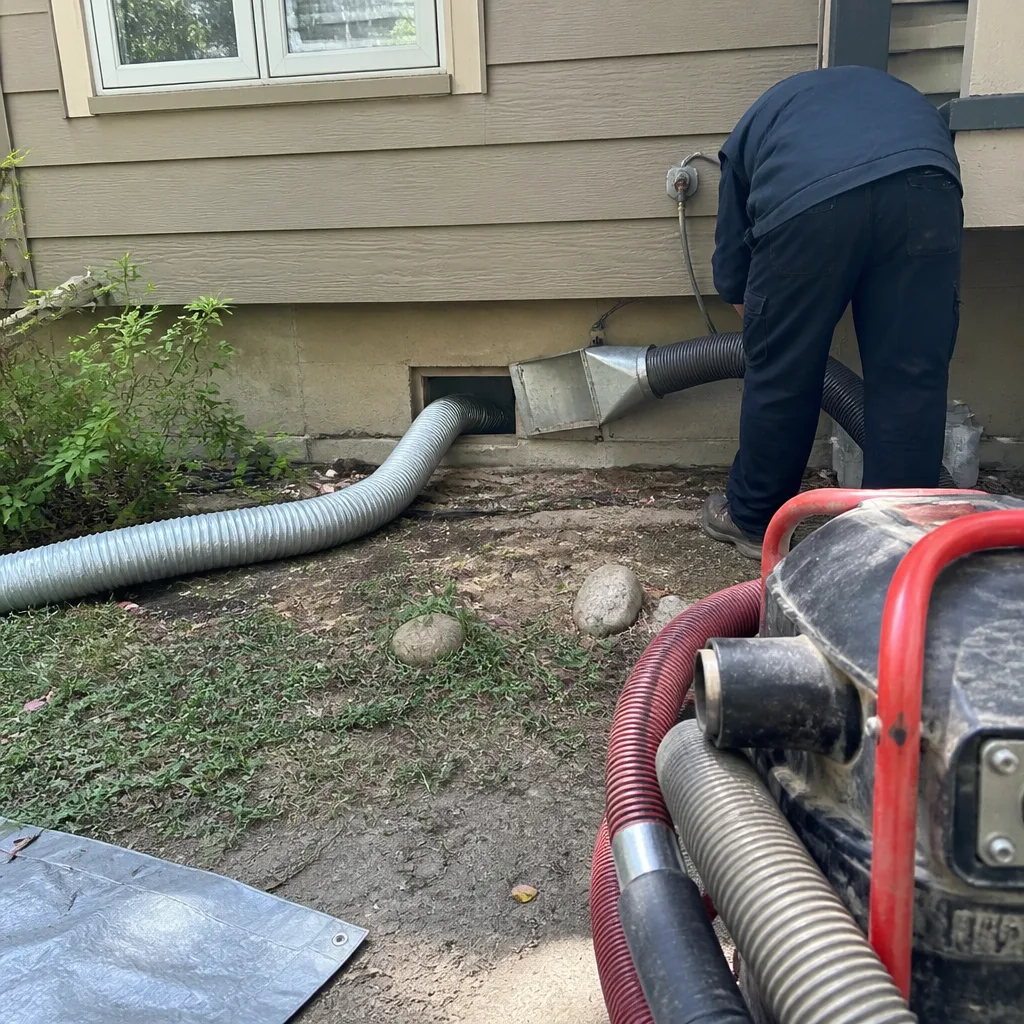 Before
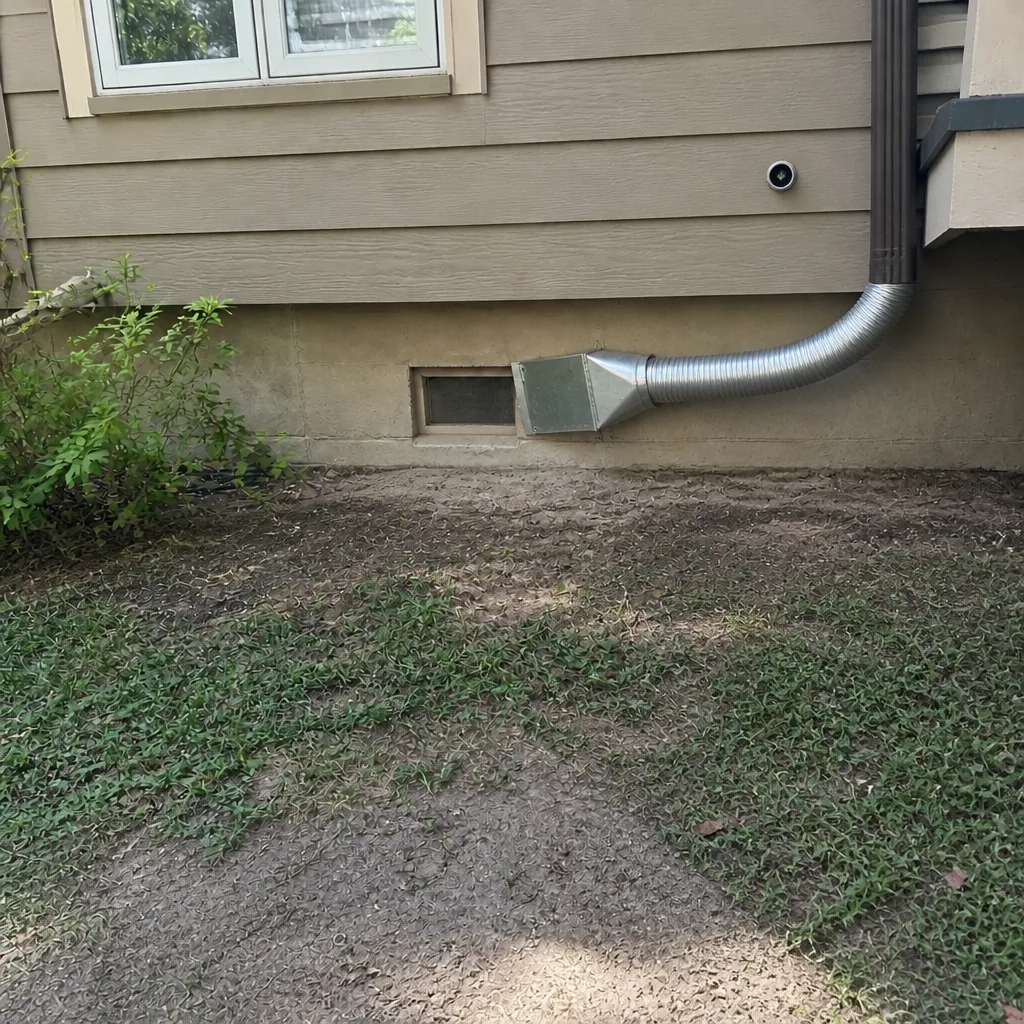 After
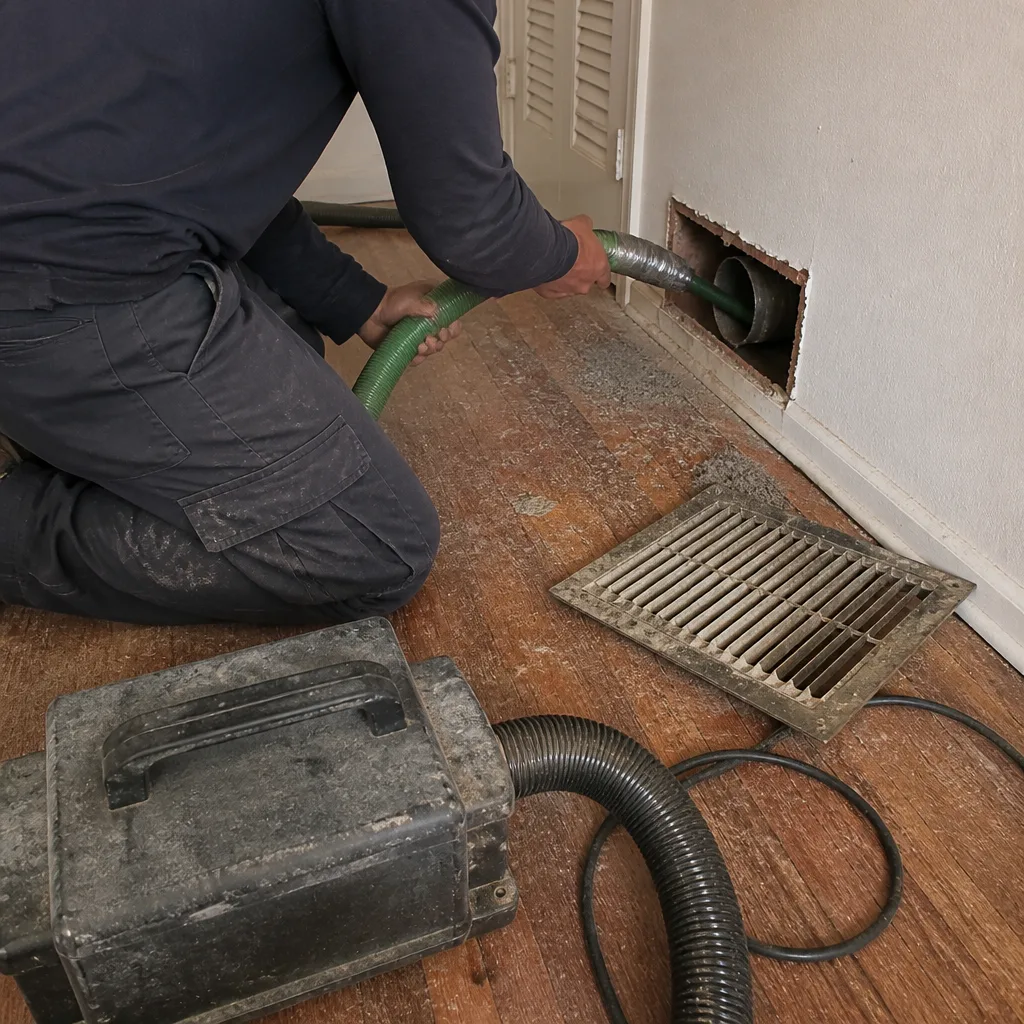 Before
 After
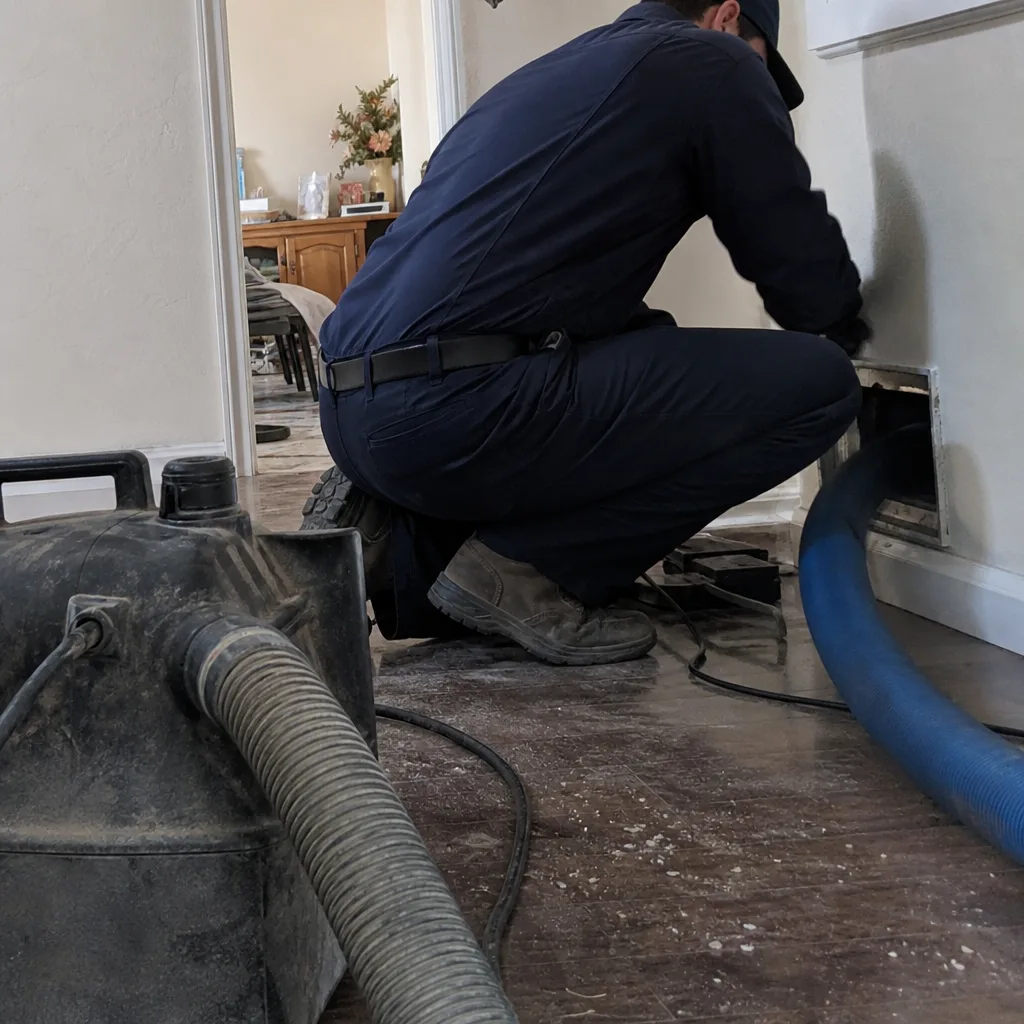 Before
 After
When to Call a Professional
Call a professional when you can’t find the answer yourself. A musty smell that returns on every heating cycle, a room that stays two or three degrees off the rest of the house, a filter that’s loaded in weeks, a dryer that’s taking two cycles, a home you just moved into and don’t know the duct history of, or a smell that started with a renovation are all points at which an inspection is worth more than another round of guessing. Some of these are cleaning issues, some are repair issues, and some are both. Looking inside the system, with equipment designed to inspect and clean it, tells you which you have. Westminster Air Duct Cleaning Pros offers free estimates in Westminster. Call (833) 736-5689. We answer 24/7, with fast dispatch from 7am to 7pm, Sunday through Friday, closed Saturday.
Frequently Asked Questions
Air duct cleaning prices are set per job by a written estimate, not by a per-vent or teaser price, and the written estimate determines the final cost. The price depends on the size of the home, the number of runs, the condition of the ducts, and whether the job also includes dryer vent cleaning, HVAC cleaning, or duct repair. Ask for the estimate in writing with a clear scope before any work starts. Call (833) 736-5689 for a free estimate. We answer 24/7, with fast dispatch from 7am to 7pm, Sunday through Friday, closed Saturday.
Cheap quotes are usually smaller jobs than they appear. A low figure often covers vacuuming the visible registers and the trunk, without touching the branch runs, the blower, or the coil. A more thorough job uses agitation equipment to dislodge debris along the full duct run and a HEPA vacuum with contained negative air to capture what’s dislodged, and that equipment costs more to run. The question to ask isn’t “why is yours higher” but “what does yours include.” A written scope answers it. Call (833) 736-5689 if you’d like a written estimate. We answer 24/7, with fast dispatch from 7am to 7pm, Sunday through Friday, closed Saturday.
Before-and-after photos of your own ducts are the standard, and they should be part of the conversation. Ask for photos of the ducts and the blower before the job and after it, showing what was removed. The professional side of this work should be able to show you the inside of the system. Westminster Air Duct Cleaning Pros uses Rotobrush agitation systems and Nikro HEPA equipment, along with Abatement Technologies negative-air containment, which is the equipment that makes the result visible. Call (833) 736-5689 for a free estimate. We answer 24/7, with fast dispatch from 7am to 7pm, Sunday through Friday, closed Saturday.
There’s no universal schedule, and anyone who gives you a fixed yearly number is guessing. It depends on the home, the pets, the presence of allergy sufferers, any renovations, and whether the ducts were ever cleaned after construction. An inspection every few years, and a cleaning when the signs warrant it, is a reasonable rhythm. If you’ve moved into a Westminster home with no duct history, an inspection once is a good start. Call (833) 736-5689 to set one up. We answer 24/7, with fast dispatch from 7am to 7pm, Sunday through Friday, closed Saturday.
Yes, a coated blower wheel almost always indicates a dust problem upstream of it. The blower sits in the airstream and catches what the return carries. When the inlet side is dirty, the wheel coats and moves less air, which is exactly when comfort and efficiency drop. Cleaning the ducts without checking the blower and coil leaves the source in place, which is why we treat HVAC cleaning and duct cleaning as one job. Our technicians have up to 15 years of experience diagnosing both. Call (833) 736-5689 for a free estimate. We answer 24/7, with fast dispatch from 7am to 7pm, Sunday through Friday, closed Saturday.
Some homeowners choose to be present, and others arrange access and go about their day. What’s more important than presence is a clear scope in the written estimate and photos showing the system before and after the work. Our technicians work with the equipment contained, using negative-air technology so dislodged debris is captured rather than recirculated, and the estimate you approve is the price. To book, call (833) 736-5689. We answer 24/7, with fast dispatch from 7am to 7pm, Sunday through Friday, closed Saturday.
The Bottom Line
The warning signs that matter most are the ones you can’t see as dust. Uneven room temperatures, filter changes that come too fast, a blower wheel that’s coated, a run that used to work and doesn’t: these are restriction and performance signals, and in Westminster’s tight, dry-running homes they’re more common than the obvious ones. The contamination signs, like odors, visible debris, and post-renovation smells, are real and worth acting on, but they’re the later stage. If you notice any of these, an inspection is the right next step, because the inside of your ducts is the one part of the system you can’t check from the living room. Westminster Air Duct Cleaning Pros offers free estimates in Westminster. Call (833) 736-5689. We answer 24/7, with fast dispatch from 7am to 7pm, Sunday through Friday, closed Saturday. One flat price per system, agreed before work starts, with before-and-after photos and a satisfaction guarantee.
Written by the team at Westminster Air Duct Cleaning Pros.